
Interview Of Nicole Conn
Filmmaking from Real Life Experiences - Nicole Conn & Dr. Kimberley Linert
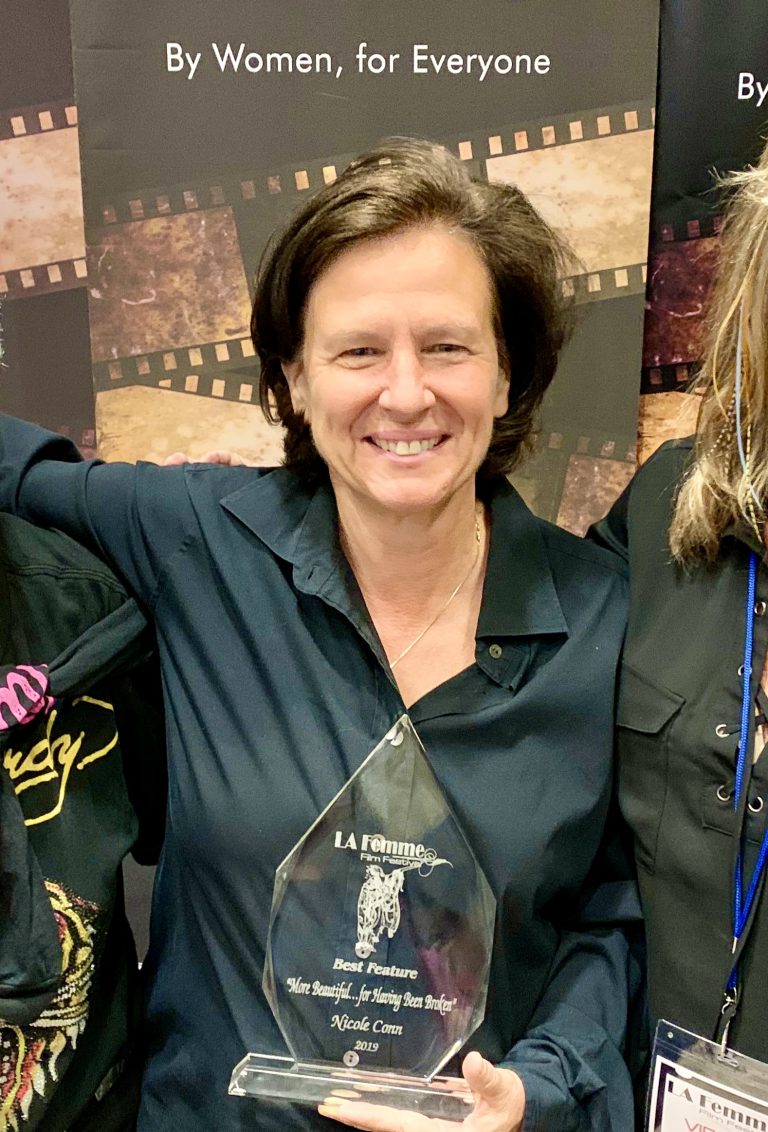
Nicole Conn has been a pioneering filmmaker for over 30 years, best known for her Cult Classic, Claire of the Moon, and her best-selling features, Elena Undone, A Perfect Ending, little man and More Beautiful for Having Been Broken. Conn has achieved worldwide industry recognition with her lesbian-themed films and is perhaps the best-known Writer/Director of women’s films in the world. In another pioneering effort, Conn created Coming Out For Love, the first ever LGBTQ+ Dating Competition Show (ala the Bachelor). In her earlier career she was published by Simon Schuster with Angel Wings, Passion’s Shadow and She Walks in Beauty. She’s written novelizations for Elena Undone and Claire of the Moon.
Contact Nicole Conn :
Coming Out For Love… it’s so much more than a reality show.
It’s a snapshot of the LGBTQ+ Community at its best. www.comingoutforlove.com

Interview With Author Nicole Conn
Tell us about yourself and how many books you have written.
I’ve been writing stories since I was in the third grade. I was also a voracious reader growing up, constantly disappearing into worlds built from emotion, longing, heartbreak, beauty, and complicated human connection. When I saw the film, Desert Hearts, I was shaken. In a good way. I had never felt anything so powerful as the feelings that were yanked from my core. I knew driving home from the theater, that I had to tell stories that went straight for the heart — stories that made people think and feel deeply. I also devoured novels that had a romantic core which became the basis for all my work – lead with the heart!
Most people know me first as a filmmaker. I wrote and directed Claire of the Moon, which unexpectedly became a cult classic and completely changed the trajectory of my life and career. Following its success, I found representation and eventually signed a three-book deal with Simon & Schuster. My first novels, Passion’s Shadow and Angel Wings, were published in the mid-to-late 90s.
After that I returned to filmmaking and continued creating women-centered films including Cynara, little man, Elena Undone, A Perfect Ending, and More Beautiful For Having Been Broken — stories that somehow found audiences all over the world and connected deeply with people searching to feel that intensely.
In between films, I continued writing novels including the novelization of Claire of the Moon, which went into fifteen reprints, She Walks in Beauty, and the novelization for Elena Undone.
What is the name of your latest book and what inspired it?
My latest book is Descending Thirds, an epic romantic drama set inside the fiercely competitive world of international classical piano and competition.
At its center is Alexandra von Triessen, who finds herself caught between two extraordinary brothers – both composers. One, a charming and irresistible lothario and showman, the other quietly certain – a genius savant who writes purely for the music and could care less about fame and glory. Alexandra is torn between them both in what unfolds as a searing triangular love story — devastating, sensual, intelligent, cinematic, and deeply human all at once.
The inspiration came from multiple places converging together over many years. Firstly, from my Mother, was a classical pianist and teacher, so classical music has been woven into my emotional DNA since birth. Years later, we would watch recordings of the Van Cliburn Competition together obsessively. Held but once every four years it’s the absolute apex for serious pianists. It inspired the Ketterling Competition which opens the novel. I became fascinated not only by the music itself, but by the extraordinary psychological pressure surrounding genius and artistic greatness – the sheer tension and strain. I was thrilled to investigate what those circumstances would reveal to me about my lead characters, Alexandra and Sebastian. I wanted readers to feel immersed inside a world where music, ambition, family expectation, and desire collide with explosive consequences and to ask themselves, what price fame and glory?
Descending Thirds has existed within me since 1999 when we became pregnant with my daughter, Gabrielle. I became a fervent Sears Attachment Parent and I seriously believe having Gabrielle wrapped to my chest in a “Baby Björn”, lit a fuse of exponential creativity. I wrote the script in two weeks because as a filmmaker I assumed that’s how I would tell this story. But almost immediately I knew the thematic scope and the intricacy of Alexandra’s relationships with both Sebastian and Conrad would be so much better served in a novel. The story could become ever more expansive, so I used the script as the outline for the novel itself. In many ways it feels like the culmination of everything I’ve spent my career exploring emotionally — love, identity, obsession, music, family, sacrifice, artistic ambition, and the terrifying vulnerability of truly opening your heart.
Do you have any unusual writing habits?
Music completely possesses my writing process. I can spend hours finding the exact emotional piece needed before writing a scene. And I usually choose a specific composer or type of music to become the emotional spine of every project I create. With Descending Thirds, it was Rachmaninoff and Prokofiev.
As for routine – the first thing I do in the morning (usually between 4:30-600 am) is puzzle. I can’t rave enough about Puzzling. So good for the memory, concentration. It makes me so zen, mindful. And as you click the puzzle pieces together, so story elements begin to coalesce and paint a fuller picture. I then walk four miles to let my mind wander through all kinds of ideas, plot points, and fabulously witty dialogue. You can’t have a better drug than the endorphins popping as you hit mile three. And it centers me as well, removes the cobwebs. After that, writing sessions stretch between one and half to three hours, two to three times a day. Except the final version. I’ll work all day and all night to complete the manuscript.
My Steadfast Rule – 1.) Vomit the first draft and include absolutely every single thought, all the pages you drafted here and there no matter how well they still connect to the story. 2.) Rewrite. Revise. Rework. Then do that again about two thousand times! To me writing is all about rewriting until it’s absolutely perfect. And then do that some more!
What authors, or books have influenced you?
I was an obsessive and voracious reader and adored my stepfather’s den. He introduced me to the classics: Dickens, Du Maurier, Tolstoy and JD Salinger. I would also sneak in while he was at work and read “Fire Island,” “Valley of the Dolls” & “Peyton Place”. “Gone With The Wind” stole my heart when I was the 4th grade. And I even made it through “Anna Karenina” in the 5th grade, but much preferred the tortured Heathcliff in “Wuthering Heights”, and everything Jane Austen wrote. Romance is my calling card.
What are you working on now?
Right now, I’m actively developing Descending Thirds as a limited television mini-series, which honestly feels like the story returning to its cinematic roots. The scope of the world, the emotional intensity, the classical music backdrop, the sweeping romance, the era — it all feels incredibly suited for prestige longform television. Or as I describe it an Epic Emmy Extravaganza!
I’m also continuing to promote the audiobook, which became one of the most meaningful artistic experiences of my life. The brilliant and multi-award-winning Mary Jane Wells narrated and produced it, and we integrated nearly seventy pieces of classical music throughout the story along with original compositions written specifically for the two composer brothers by English composer Sally Bishop Melbourne. It became far more immersive and emotional than I ever imagined possible. My Mother, who was also a classical pianist has 6 cuts from her performances in the audiobook as well.
What is your best method or website when it comes to promoting your books?
https://descendingthirds.com — It contains information about the novel, reviews, awards, and the extraordinary backstory behind how Mary Jane Wells, Sally Bishop Melbourne, and I ultimately came together to create the audiobook experience. It also shares the deeply personal story of my Mother’s inspiration for the novel and the dedication to her that lives at the heart of Descending Thirds. My additional films, books, and projects can be found at Nicole Conn Films Global – www.nicoleconnfilmsglobal.com. Clips of both the paperback and audio-book trailers can also be seen at https://www.youtube.com/@NicoleConnFilmsGlobal
Do you have any advice for new authors?
Write what you know is number one. And write the book you want to read. The publishing landscape changes constantly. Trends come and go. Algorithms change weekly. Everyone will have opinions about what sells, what doesn’t, what you “should” be writing. But authenticity is ultimately the thing readers remember. And, trust me, contorting yourself into someone you’re not won’t make you happy one bit!
What is the best advice you have ever heard?
You have to love the “doingness” of writing – much more than the dream of creating a best-seller. If you’re into the praise, awards, reviews, or commercial success, this industry can become emotionally brutal very quickly. But if you genuinely love storytelling itself — the creating, the discovering, the emotional excavation — then even difficult periods still contain meaning.
What are you reading now?
I always love me some Margerat Atwood! I’m just now listening and reading the hardcover of Book of Lives: A Memoir of Sorts”. I also just order her “On Writers and Writing” as I’m just beginning my memoir, “Breathing Required”.
What’s next for you as a writer?
Writing the pilot for the “Descending Thirds” mini-series, developing my next feature, “do we not grieve” as well as creating my memoir “Breathing Required” as a visual story-telling experience.
If you were going to be stranded on a desert island and allowed to take 3 or 4 books with you what books would you bring?
I cut my teeth on “Gone With The Wind” and remained obsessed so that’s a slam dunk. I adored “The Woman’s Room” by Marilyn French. “Wuthering Heights”. And can I take all of Margerat Atwood and Barbara Kingsolver’s libraries?!

Authors Interviewing Characters: Nicole Conn
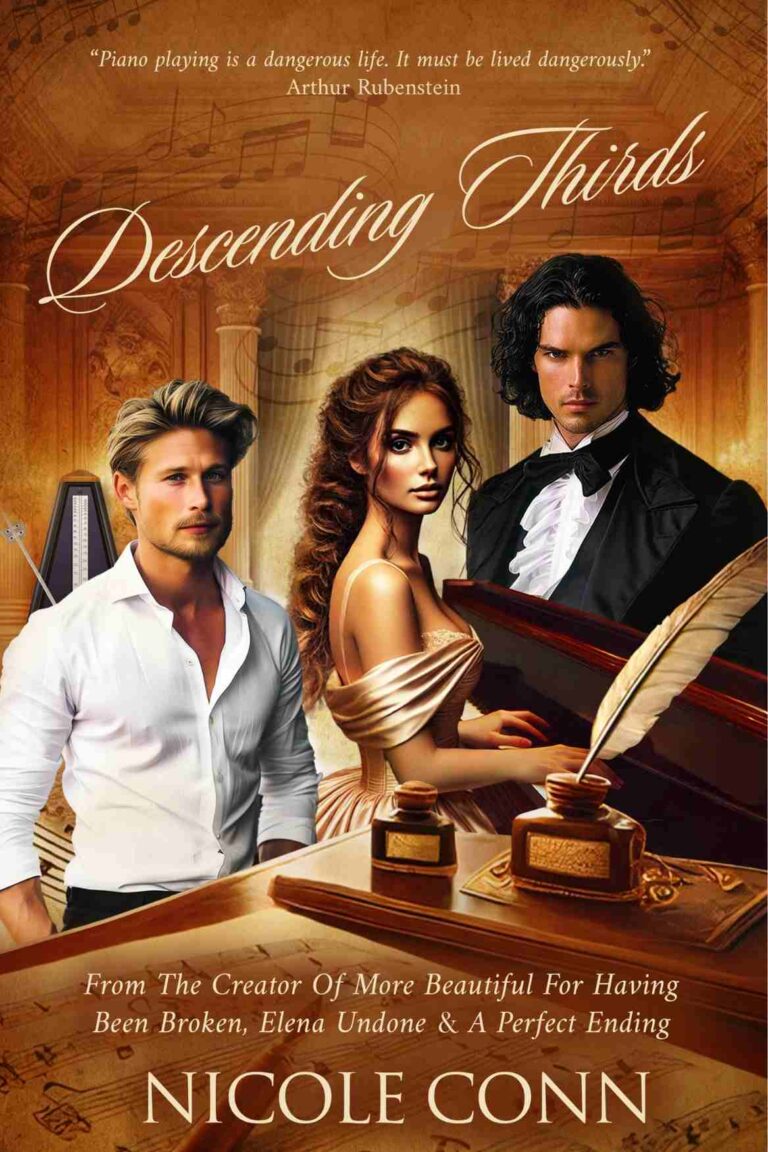
In the high-stakes world of classical music, Alexandra von Triessen, a gifted but insecure pianist, navigates the cutthroat International Ketterling Piano Competition. Dazzled by the charming Sebastian D’Antonio, she finds herself drawn into a web of intrigue surrounding his enigmatic and estranged brother, Conrad. Just as Alexandra’s star begins to rise, a shocking discovery sends her world crashing down, exposing secrets and lies that threaten to destroy everything she’s worked for.
Descending Thirds is a gripping story of ambition, betrayal, and the blurred lines between artistry and integrity. This page-turner explores the sacrifices we make in pursuit of our dreams and the devastating consequences of hidden truths. With two shocking twists that will leave you reeling, this unforgettable novel will resonate with anyone who has ever dared to reach for greatness.
Interviewing Alexandra von Triessen from Descending Thirds
There are some characters you create. And then there are the ones who seem to arrive fully formed, carrying pieces of your own history back to you. Alexandra von Triessen was that character for me. If anything, artistically, she’s my straight alter-ego.
Set against the ruthless backdrop of the International Ketterling Piano Competition, Alexandra lives inside a world where perfection is demanded, vulnerability is dangerous, and love has the power to both save and destroy. She is brilliant, emotionally guarded, deeply sensual, and torn between two extraordinary brothers—one a dazzling showman who commands every room he enters, the other a quiet genius who writes music as though he were born directly from it.
I sat down with Alexandra to ask her a few questions she has probably spent most of her life trying not to answer.
Nicole Conn: Alexandra, do you remember the first moment you realized music would cost you something?
Alexandra: I think all serious artists know very early that love becomes conditional around talent. You begin to understand that the thing people praise in you is also the thing they will eventually demand from you. Piano was never simply joy in my life – even when it provided me moments of absolute elation. It was expectation. Discipline. Survival. But it was also the one place where I could say things I was forbidden to say out loud.
Nicole Conn: Your mother, Claire, is such a powerful force in your life. Even when she isn’t physically present, she seems to shape so much of how you see yourself. Did you spend your life trying to please her or escape her?
Alexandra: Both. I think daughters often inherit their mothers’ unfinished longings before they even understand what they are carrying. My mother loved beauty, discipline, excellence… but there were always grief and anger woven into those things too. She began expecting my accomplishments even as she resented them. I spent years believing that if I became extraordinary enough, perhaps I could finally earn a kind of peace from her. But children eventually discover their parents are not gods. They are wounded people trying to survive themselves. Sadly, the less I have to do with my mother, the better.
Nicole: The Ketterling Competition feels almost like another character in the novel. Did you love it or hate it?
Alexandra: Both. That’s what made it dangerous. They are a necessary evil for serious pianists, where politics intersects with perfection and commerce. Competitions create intimacy through shared suffering. Everyone is exhausted, terrified, unraveling privately while pretending to be invincible publicly. There’s a strange seduction to that world. Every round feels like life or death. And when you survive a cut, you almost love the machine that’s destroying you.
Nicole: And then there were Sebastian and Conrad.
Alexandra: (laughs softly) Yes. Sebastian and Conrad – had I but known.
Nicole: You loved them differently.
Alexandra: Completely differently. Sebastian saw me as a woman before anyone else did. He understood appetite, glamour, danger, pleasure. Conrad saw something much more frightening. He saw right through me. There’s nowhere to hide from someone like that.
Nicole: Was there ever a moment you knew your life would never belong entirely to you again?
Alexandra: Love always changes the architecture of a life. But genius does too. The tragedy is when they arrive at the same time. When you’re travelling on tour, your life belongs to the orchestra, conductor and the audience. It’s easy to lose yourself along the way.
Nicole: Descending Thirds lives so deeply inside the world of elite classical piano. What would people be most surprised to learn about that world?
Alexandra: How lonely it is. Audiences see elegance and transcendence. They don’t see the psychological brutality underneath it. The endless practicing. The physical pain. The terror. The way your entire identity becomes attached to whether you succeed or fail in a single performance.
Nicole: What does success look like?
Alexandra: It depends on who you’re asking. For Sebastian it’s fame at all costs. For Conrad, playing for himself is all the success he requires. Sadly, most pianists end up becoming teachers, playing in ensembles and lounge acts. For the rare few of us, success is measured by being on tour as a principal as well as recording the repertoire. It’s tenuous and fleeting.
Nicole: Last question. After everything, do you believe great art is worth the cost?
Alexandra: (long pause) Only if you survive it long enough to still recognize yourself afterward.
Author’s Note: Long before I ever wrote Descending Thirds, my mother, Christa Hoven—a trained classical pianist who later became a piano teacher—and I spent years devouring videotapes of the legendary Van Cliburn International Piano Competition together. I would often buy one or two new Cliburn tapes for birthdays or Christmas, and we would lose ourselves in the breathtaking performances, emotional intensity, and impossible pressure these young musicians faced competing at the highest level. Those evenings became far more than a shared love of music; they became the emotional foundation for Descending Thirds and the inspiration behind the fictional International Ketterling Piano Competition that shapes Alexandra’s life and opens the novel.
Nicole Conn has been a pioneering filmmaker for over thirty years, best known for her Cult Classic, Claire of the Moon – soon to have it’s 35th Year Re-Release following it’s 10th and 20th year Re-Releases. Among her best-selling features, Elena Undone, A Perfect Ending, little man and More Beautiful for Having Been Broken. Conn has achieved worldwide industry recognition with her lesbian-themed films and is perhaps the best-known Writer/Director of women’s films in the world. Notably, Elena Undone holds the record for the longest kiss in cinematic history.
In another pioneering effort, Conn created Coming Out For Love, the first ever LGBTQ+ Dating Competion Show (ala the Bachelor). In her earlier career she was published by Simon Schuster with Angel Wings, Passion’s Shadow and She Walks in Beauty. She’s written novelizations for Elena Undone and Claire of the Moon.
It took her 25 years, but finally iDescending Thirds was published March and is deeply personal like her films. She will also release Blue Love Dance – A CineRomance, a behind the scenes look at the making of her single favorite sequence of her career. Once again, breaking molds intercutting a love scene with dance and nature’s glorious sunset.

Writing Music Into Fiction Is One Challenge; Translating It Into Audio Is Another
When I began writing Descending Thirds, I wasn’t simply writing characters who happened to be musicians. I was writing a love story that could only exist through music. That distinction became the single greatest creative challenge of my life.
Set inside the elite world of classical piano competition, the novel follows Alexandra von Triessen and two extraordinary brothers—Sebastian, a dazzling “finger-proud” showman intoxicated by applause, and Conrad, a reclusive musical savant who composes with almost frightening emotional purity. Alexandra becomes emotionally and romantically entangled with both men, but it was her connection with Conrad that presented the greatest challenge on the page because Conrad and Alexandra often communicate through music rather than words.
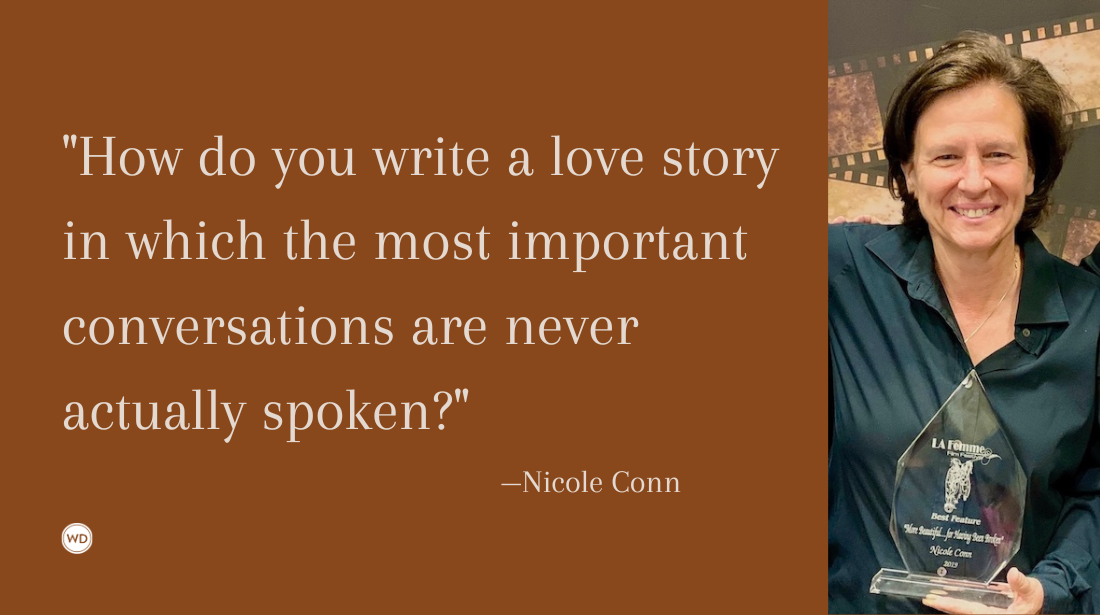
At the heart of their relationship were scenes at two grand pianos positioned face-to-face, transforming performance into conversation. Their connection deepened not through exposition or dialogue, but through phrasing, restraint, trust. One introduced a melodic idea; the other answered. A pause became vulnerability. A variation became flirtation. A flourish became seduction. Music became the language of their courtship, until, as Alexandra reflects, “she was never quite certain where words had begun, and the music had left off.” For a novelist, that presented a fascinating challenge: How do you write a love story in which the most important conversations are never actually spoken?
And then I was plagued with how to make deeply music-centric storytelling emotionally accessible to readers who may know absolutely nothing about classical music? That question haunted me constantly because I knew from the beginning, I did not want readers to feel excluded or intimidated. Technical expertise was never the point. I wasn’t interested in showing off musical knowledge or writing scenes that felt academically dense. I wanted readers—especially readers unfamiliar with classical music—to feel what Alexandra felt. Longing. Recognition. Danger. Transcendence.
I wanted them to understand how two people could fall in love while barely speaking at all.
While writing the novel, I often structured scenes the way I would structure film sequences as a director—through rhythm, silence, interruption, escalation, release. Music became the emotional architecture beneath the prose itself. Even sentence structure began mimicking musical movement. Long flowing passages mirrored seduction or obsession. Sharp fragmented sentences created rupture and tension.
And then came the audiobook adaptation. And suddenly everything became exponentially more complicated.
The first time I heard portions of the manuscript read aloud, I realized something essential was missing. On the page, readers imaginatively “hear” the music internally. Their minds fill in the emotional resonance. But in audio form, silence becomes literal. Moments built entirely around musical connection suddenly risked feeling emotionally incomplete.
Multi-award-winning narrator and audiobook producer (and dear friend!) Mary Jane Wells helped resolve this issue. Add music to the book. We knew a traditional audiobook approach would flatten something fundamental about the story itself. So, we began exploring whether it might actually be possible to incorporate music directly into the audiobook experience—not as decoration, but as emotional storytelling. That decision opened an entirely new creative labyrinth.
I discovered Naxos of America, Inc., a stock house for classical music. Working with their excellent licensing agent, Laura Annick, I began exploring their extraordinary catalog of classical recordings. For the first time, I could imagine listeners hearing fragments of the same pieces inspiring the emotional life of the novel. Tiny snippets of Debussy, Rachmaninoff, Prokofiev, Chopin—musical breaths woven carefully into the narrative fabric.
But then a much larger problem emerged. What about the original compositions written by Sebastian and Conrad themselves? These fictional brothers had distinct musical voices throughout the novel. Sebastian’s work carried passion, seduction, theatricality. Conrad’s compositions were intimate, haunting, almost spiritually exposed. Readers needed to believe these pieces existed emotionally inside the world of the story.
Mary introduced me to composer Sally Bishop Melbourne, a brilliant UK-based musician who immediately understood what I was trying to accomplish emotionally. Sally began composing original piano works not merely inspired by the characters but written as though Sebastian and Conrad themselves had composed them.
It was one of the most creatively emotional experiences I’ve ever had. For the first time, imaginary music that had lived only inside my head while writing the novel became real sound in the world. And something unexpected happened. The audiobook stopped feeling like adaptation. It became expansion. And I still get goosebumps through certain passages where Sally’s music makes all the difference.
The challenge then became restraint. We quickly realized the music could not overwhelm the narration. It had to function almost like emotional oxygen—entering gently, disappearing before overstaying, allowing listeners to feel rather than simply observe. I began to understand something profound during the process:
Just as score in my films, music in storytelling behaves very much like emotion itself. It is associative. Fragmented. Personal. Difficult to fully explain logically.
That realization ultimately changed how I think about writing altogether. Writers often believe readers need information to connect. But I think readers are searching for emotional recognition. They want to feel something true before they fully understand it intellectually. That is what music does almost instantly. And perhaps that is why I fought so hard for the audiobook to preserve it even when it became a technical nightmare to produce.
I desperately wanted readers—especially those who may never have entered the world of classical music before—to experience even fleeting moments of its transformative power. To hear how a single unresolved phrase can ache like longing. How a melody can seduce. How harmony can feel like intimacy itself.
Because for Alexandra and Conrad, music is not performance. It is conversation. Foreplay. Love. Confession.
In the end, the audiobook became something even more personal than I anticipated. The inspiration for Descending Thirds began with my mother, Christa Hoven, a classical pianist and piano teacher whose life was devoted to music. Some of her own performances are woven throughout the audiobook, allowing her artistry to become part of the story that she helped inspire. Sadly, she passed two days after the audio-book’s release and only heard snippets. But I was so happy to have her spirit woven throughout the book.
As I listened to those pieces alongside the original compositions and my own beloved classical works that shaped the novel, I realized I had come full circle. My father bought my mother a new piano the day after I was born. Family lore holds that she placed me in my crib and sat down to play. Some of my earliest memories are of lying beneath her piano, listening as music filled the room and vibrated through the floorboards.
Long before I understood words, I understood music. It was my first language, my first storyteller, my first experience of beauty and emotion. Perhaps that is why music became the language of Alexandra and Conrad’s love story as well. Just as the first communication I remember came through the sound of piano keys, their deepest conversations unfold not through words, but through music—where longing, intimacy, heartbreak, and love are expressed in ways language alone can never fully capture.
Check out Nicole Conn's Descending Thirds here:

The New Novel I Spent 25 Years Writing Became The Last Gift I Shared With My Mother
By Nicole Conn
One of the questions I have been asked by my film fans most often since the release of my novel ‘Descending Thirds’ is: “Why did you suddenly decide to write a mainstream novel?” The truth is, I didn’t. I spent twenty-five years writing it.
For most people, I am known as a filmmaker. Since releasing ‘Claire of the Moon’ in 1993, I have spent decades telling stories through images, performances, music, editing, and the language of cinema. What many people don’t realize is that long before I was directing films, I was writing. I began in elementary school, became a voracious reader, and eventually published novels alongside my film career.
But ‘Descending Thirds’ was different. This wasn’t a project that arrived quickly. It became the book of a lifetime. What began as a screenplay slowly evolved into something much larger. Over the years, life intervened. Films were made. Children were raised. Crises were survived. Careers shifted. There were triumphs, heartbreaks, and losses. Yet somehow, through all those years, Alexandra von Triessen and the world of elite classical piano competition remained with me.
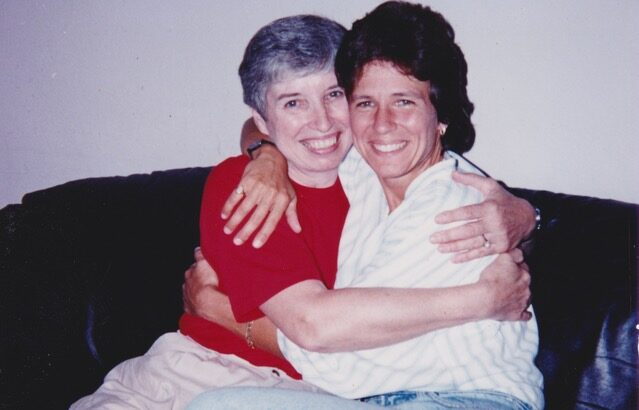
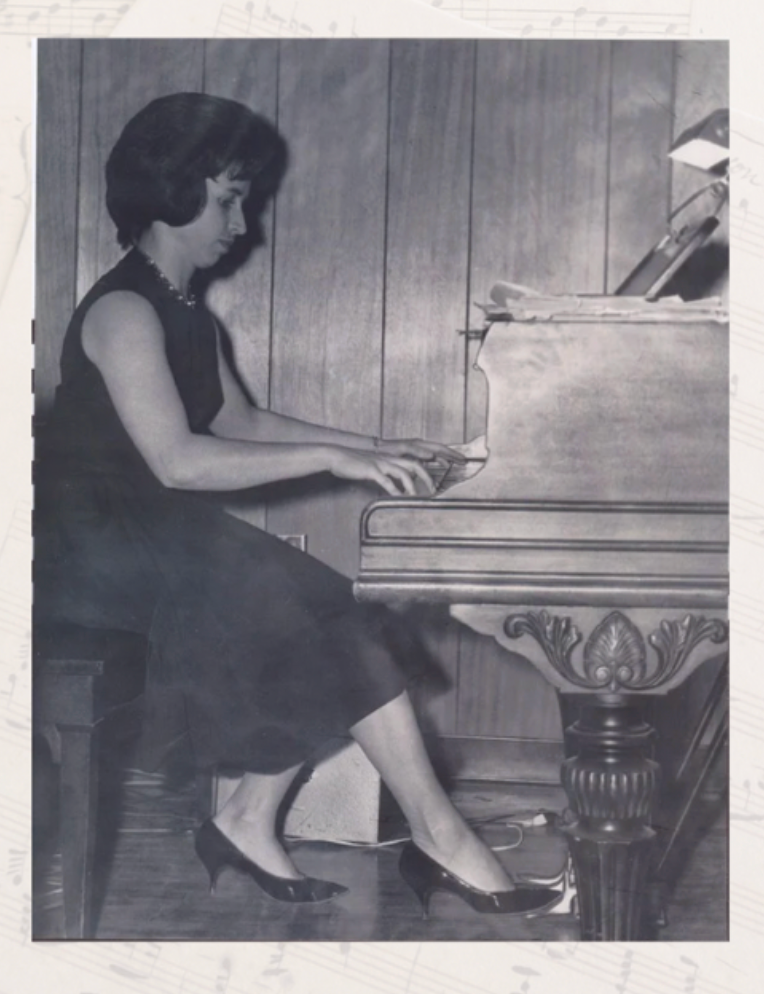
Looking back now, I realize there was a reason. The book was never only about music. It was always about my mother. My mother, “Mommo” —Christa Hoven—was a classical pianist and piano teacher. Music wasn’t simply something she did. It was the way she moved through the world.
For those who followed my career, she became something of a beloved fixture. She came to every book signing, every premiere, every festival, every event she could physically attend. If there was an audience, Mommo was in it. I often joke that she was my own version of Bette DeGeneres, but it’s true — the proud mother who never stopped showing up, cheering from the front row, celebrating every milestone as though it were her own. Looking back, I realize how extraordinary that gift was.
Family lore has it that my father bought her a new piano the day after I was born. My mother placed me in my crib and sat down to play. Some of my earliest memories are of lying beneath her piano, listening to the sound fill the room above me. Before I understood words, I understood music. Perhaps that’s why emotionally immersive scores to my films became an imperative. I always say the score is the soul of the film.
Years later, when I began developing the characters and emotional world of ‘Descending Thirds’, I found myself returning repeatedly to those memories. The novel takes place within the fiercely competitive world of classical piano, but at its heart is a story about passion, obsession, love, sacrifice, family, and the price we pay for greatness.
Those themes were inspired by so many countless things I experienced working in the entertainment industry about fame and the price of glory. How much of your soul are you willing to sell to get to the top? And, of course, there’s a gorgeous triangular love story as well or it wouldn’t be a Nicole Conn project.
But the music came from Mommo. As her health declined, I often wondered whether I would ever finish the book. She became ravaged by Parkinson’s which slowly stole pieces of the woman who had once effortlessly commanded a keyboard. There were difficult years. Hallucinations. Dementia. Moments that felt impossibly cruel. The day she looked at me and asked me to explain what the notes were. That shattered me more than when she couldn’t remember my son’s name.
When the audiobook adaptation of ‘Descending Thirds’ finally became a reality, I turned to my dear and fabulous friend, Mary Jane Wells. I had cast her in Elena Undone & A Perfect Ending as every lesbian’s best friend. What most fans of those films don’t realize is that Mary is a multi-award-winning narrator and audio book producer. We both knew the story demanded music—not as background decoration, but as part of the storytelling itself. We licensed classical works, commissioned original compositions, and carefully built a cinematic listening experience. Most importantly, we included several of my mother’s own piano performances.
In a story she inspired, her music would live forever. I don’t think I fully understood what that meant until the audiobook was finished. The release date was November 1, 2025. My mother passed away two days later. There is still a part of me that struggles to write those words. Because when I flew up to be with her to share the book, she was only able to listen to a section of it briefly before she slipped into unconsciousness for good. Whenever a passage was scored with a snippet of music, a sweet smile caressed her gaunt and pained face.
Since her passing, many people have asked me if having her involvement would preserve her legacy. The truth is that I didn’t set out to preserve it. I set out to honor it. There is a difference. Legacy suggests something complete. My relationship with my mother is anything but complete.
I still hear her when I look at the piano of my childhood. I still think about the countless Van Cliburn Competition recordings we watched together over the years which became the inspiration for the novel’s opening. I still remember her passion for teaching, her insistence on excellence, her love of music, and her absolute dedication to sitting at the piano right up until the end. I even made her a character in the book – Alexandra’s first piano teacher.
‘Descending Thirds’ may have taken twenty-five years to complete, but perhaps it needed every one of those years. Perhaps some stories require us to live them before we can write them. Today, when readers tell me they were moved by the novel, I smile. When listeners tell me the music affected them deeply, I smile even more. Because what they are hearing isn’t simply a story about classical music.
They’re hearing an echo. A daughter lying beneath a piano. A mother at the keyboard. And a conversation that, thankfully, will never end.
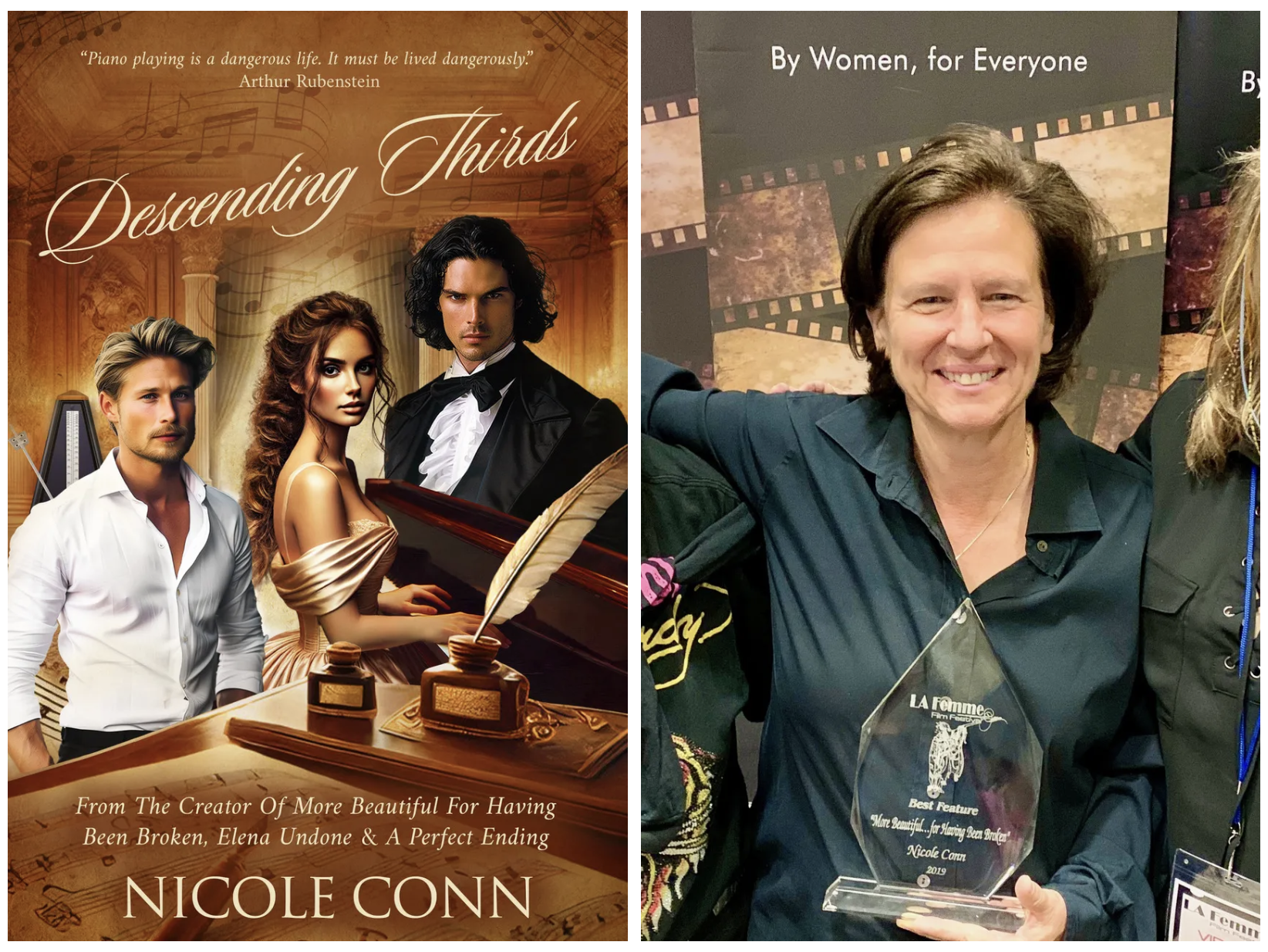
Nicole Conn is an award-winning writer and filmmaker known for crafting bold, emotionally intelligent stories centered on complex women navigating love, identity, and resilience. Her debut feature, “Claire of the Moon,” became a cult classic and a pioneering work for the LGBTQ+ community, helping expand lesbian representation in independent cinema. Conn went on to write and direct acclaimed features including “Elena Undone,” recognized as a defining modern romance, and “A Perfect Ending,” praised for its emotional depth and sensual honesty. Her documentary “little man,” chronicling the premature birth of her son, received multiple Best Documentary honors and was acquired by Showtime. She is the author of several novels, including “Descending Thirds,” a sweeping romantic drama set in the high-stakes world of classical music. The novel has received multiple fiction awards and is currently in development as a limited television series. She lives and works in Los Angeles and advocates for women-led storytelling through NicoleConnFilmsGlobal.com. Follow Nicole on Facebook, Instagram, TikTok and Youtube.
ABOUT THE BOOK: Set between 1944 and 1975, the novel is an epic love story at its core: A gifted young pianist is drawn into a dangerous love triangle with two brilliant brothers, where rivalry and desire collide. Sensual, emotionally charged and psychologically intense, the book reimagines the world of classical music as visceral, seductive and cutthroat. Narrated by multi-award-winning performer Mary Jane Wells, the audiobook features performances by Conn’s own mother. Original compositions for the two brothers at the core of the story were written and performed by Royal Academy-trained pianist Sally Bishop Melbourne — whose personal journey closely mirrors the novel’s own heroine. The collaboration amongst the women, born from shared grief and resilience, makes the audiobook itself a powerful story of healing through art.

Book Q&As with Deborah Kalb

Nicole Conn is the author of the novel Descending Thirds. She is also a filmmaker.
Q: How much was Descending Thirds inspired by your mother’s life story?
A: The emotional heart of the novel was deeply inspired by my mother, Christa Hoven, who was a classical pianist and teacher.
Music was present in my life from the very beginning. My father bought her a new piano the day after I was born, and she often joked that the moment we came home from the hospital, she tossed me into a crib beside it and played.
Years later, I would lie beneath her piano, absorbing the vibrations, entranced and mesmerized by all of it which became a scene in the novel. Music truly became part of my DNA.
One of my favorite parts of the research was sharing recordings of the Van Cliburn International Piano Competition with her. We raced through every episode together, and those experiences became the foundation for the opening of the novel.
I was fascinated by how the characters would unfold during the tension-filled three weeks of competition, where a single performance could transform a struggling pianist’s career. Those memories of watching those shows with her are especially precious now that she has passed.
While Descending Thirds is not my mother’s story, her love of music, her devotion to her students, and the way she experienced the world through music shaped every page. In many ways, the novel became my love letter to her.
Q: Did you need to do much research to write the book, and if so, what did you learn that especially surprised you?
A: I spent several years researching the world of elite piano competitions, composers, and concert pianists back in the day where it was reading from actual books with copious notes.
Much of that research began with those Van Cliburn recordings and eventually expanded into biographies, interviews, performances, and the insights into many famous and more obscure composers. The Van Cliburn competition is held but every four years upping the ante and risks.
What surprised me most was the enormous psychological pressure placed on these young musicians. The public sees the glamour and artistry, but behind the scenes are years of sacrifice, isolation, and relentless discipline.
Many competitors are asked to perform at a level that would challenge even seasoned professionals while still in their teens or early 20s. I became fascinated by the emotional cost of greatness and how ambition can both elevate and consume us.
Q: How did you create your characters Alexandra, Sebastian, and Conrad, and how would you describe the dynamic among them?
A: The three characters represent three very different relationships to art. Alexandra came first. In many ways she is my straight alter ego. She leads with her heart. For her, music is first and foremost an emotional experience. Technique matters, of course, but only in service of expressing something truthful and deeply felt.
Sebastian and Conrad became two opposing forces acting upon her. Sebastian is charismatic, passionate, and magnetic. He thrives on performance, attention, and the intoxicating energy that exists between artist and audience. Conrad is his opposite—quiet, introspective, a genius savant indifferent to recognition. He writes music because he must. It is as natural to him as breathing.
As I wrote the novel, I began to think of them as a modern-day Dionysus and Apollo. One embodies passion, instinct, and sensuality; the other discipline, order, and transcendent beauty. What interested me wasn’t simply a romantic triangle, but what happens when Alexandra encounters these competing philosophies of art and life.
Ultimately, Descending Thirds is Alexandra's story. Through her relationships with both brothers, she discovers not only who she loves, but who she is, what kind of artist she wants to become, and what role music will ultimately play in her life.
Q: Did you know how the story would end before you started writing it, or did you make many changes along the way?
A: I knew the major emotional destination from the beginning, but the journey changed many times. Descending Thirds began life as a screenplay before it became a novel and served as an excellent outline for the book.
What surprised me most was how much deeper the characters became once I moved into the novel form. A screenplay allows you to observe a character. A novel allows you to live inside them. Alexandra, Sebastian, and Conrad all revealed aspects of themselves that I hadn’t fully understood when I first conceived the story.
When I wrote the screenplay, there was one major reveal. While writing the novel, I discovered a second revelation that changed everything and ultimately made the story far stronger. It was one of those rare moments where the characters seemed to know more than I did and I wasn’t about to second guess them!
Q: What are you working on now?
A: At the moment, much of my attention is focused on introducing readers to Descending Thirds and its recently released audiobook which features musical snippets to help introduce the reader to classical music and to enhance the experience.
I am also developing the story as a limited television series, which feels like a natural return to the medium where the project first began.
Beyond that, I have my next feature film, do we not grieve, in early development. I also have another novel, Armand’s Tango, which I hope to bring out sometime next year.
Q: Anything else we should know?
A: At its core, Descending Thirds is a novel about passion—our passion for art, for excellence, and for one another. While it unfolds against the backdrop of classical music and international piano competitions, it is ultimately a searing triangular love affair.
Individually each character grapples with family, obsession, sacrifice, and the choices that shape our lives. It asks a question that fascinated me throughout the writing process: What is the true price of greatness? And what is the cost for true greatness.
My greatest hope is that readers don’t need to know anything about classical music to be swept away by the story. Like all great music, the emotions are universal.
---Interview with Deborah Kalb
Award-winning filmmaker and novelist Nicole Conn has released Descending Thirds, a groundbreaking audiobook that blends narration with classical music
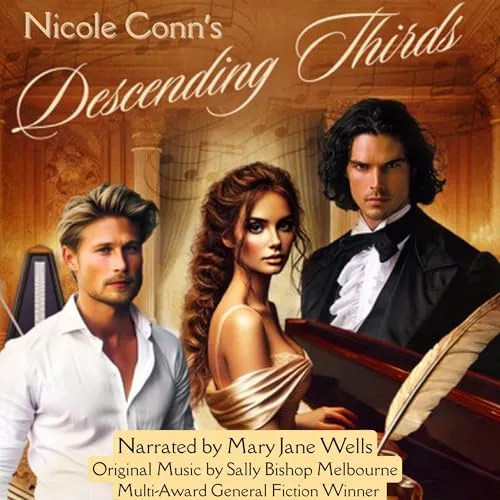
Hello again, dear audiobook friends! Today’s spotlight article is dedicated to Descending Thirds, a sweeping romantic drama from award-winning filmmaker and novelist Nicole Conn.
This twelve hours and a half audio production is available as a groundbreaking audiobook that blends narration with classical music for a fully immersive listening experience.
Set between 1944 and 1975, the novel is an epic love story at its core: a gifted young pianist is drawn into a dangerous love triangle with two brilliant brothers, where rivalry and desire collide. Sensual, emotionally charged, and psychologically intense, the book reimagines the world of classical music as visceral, seductive, and cutthroat.
Narrated by multi-award-winning performer Mary Jane Wells, the audiobook features performances by Conn’s own mother. Original compositions for the two brothers at the core of the story were written and performed by Royal Academy-trained pianist Sally Bishop Melbourne — whose personal journey closely mirrors the novel’s own heroine. The collaboration amongst the women, born from shared grief and resilience, makes the audiobook itself a powerful story of healing through art.
More than 25 years in the making, the novel is deeply personal for Conn. Inspired by her late mother, a classical pianist who appears as a character in the novel, the book explores legacy, ambition, and the emotional cost of perfection. Perfect for fans of romance and character-driven dramas, Descending Thirds bridges love, music, and artistry in a story where passion and power are ultimately inseparable. It is currently in development as an Emmy Epic limited mini-series.
The author, Nicole Conn, is an award-winning writer and filmmaker known for crafting bold, emotionally intelligent stories centered on complex women navigating love, identity, and resilience. Conn is known for her signature, searing romance — the kind of films audiences watch over and over again.
Her debut feature, Claire of the Moon, became a cult classic and a pioneering work for the LGBTQ+ community, helping expand lesbian representation in independent cinema. The film launched a career devoted to strong, smart, female-led storytelling that explores passion, vulnerability, and personal transformation. Conn went on to write and direct acclaimed features including Elena Undone, recognized as a defining modern romance, and A Perfect Ending, praised for its emotional depth and sensual honesty. Her documentary Little Man, chronicling the premature birth of her son, received multiple Best Documentary honors and was acquired by Showtime. But perhaps her most personal film, More Beautiful for Having Been Broken, is also her best.
She is also the author of several novels, including Descending Thirds, a sweeping romantic drama set in the high-stakes world of classical music. The novel has received multiple fiction awards and is currently in development as a limited television series. Its cinematic audiobook edition uniquely integrates classical repertoire and original score. You can see more about the book at DescendingThirds.com.
Multi-award-winning Conn continues to create character-driven stories that champion women’s interior lives, ambition, and emotional truth. She lives and works in Los Angeles and advocates for women-led storytelling through NicoleConnFilmsGlobal.com.
Our narrator, Mary Jane Wells, is a storyteller drawn to transformative work. Trained at the Royal Scottish Conservatoire, she spent 12 years performing across the UK and Europe before building a career in the US, including appearances at the Mark Taper Forum and touring internationally with her solo show Martha.
Now based in Los Angeles, she is an award-winning voice actress who expanded into writing and story development, contributing to the Sundance Select documentary Holy Hell (2016), later acquired by CNN and Netflix. Her acclaimed solo show Heroine (2017), based on a survivor of military sexual trauma, won multiple awards, toured Scotland, and played to sold-out audiences at the Edinburgh Festival Fringe and the Kennedy Center. The project later became an award-winning audiobook, earning an Earphones Award and the Audie Award for Best Original Work.
Mary Jane has spoken and performed at major international events, including the UN Conference on Sexual Violence in Conflict. Her work focuses on authentic, impactful storytelling that uplifts without exploitation. Her upcoming solo show, The Good Girl, continues this mission with a more personal, irreverent lens.
I will return with a full review for Descending Thirds soon, but until then, take care, stay safe, and don’t forget, always listen with your heart!
Descending Thirds by Nicole Conn
Descending Thirds by Nicole Conn
“Playing piano is a dangerous life.”
Not because of the music itself, but because of the passions it awakens, the ambitions it fuels, and the hearts it inevitably breaks.
Set against the electrifying world of elite international piano competition in the 1960s, Descending Thirds is an epic tale of love, obsession, ambition, betrayal, and the devastating cost of greatness.
At its center is Alexandra von Triessen, a gifted young pianist whose life becomes forever entangled with two extraordinary brothers. Sebastian D’Antonio is charismatic, magnetic, and impossible to resist—a “finger-proud” lothario who commands every room he enters. Conrad D’Antonio, his adopted brother, is something altogether different: a quiet musical savant who writes transcendent music not for fame or applause, but because writing music is breathing for him.
Drawn to both men, Alexandra finds herself caught in a passionate and heartbreaking triangle that spans years, continents, and some of the most prestigious concert halls in the world.
As the competitors gather for the renowned Ketterling International Piano Competition, careers are made, dreams are shattered, and long-buried secrets begin to emerge. What follows is a sweeping story of forbidden love, family loyalty, artistic sacrifice, and the lengths people will go to protect the ones they love.
Richly researched and emotionally immersive, Descending Thirds invites readers into a rarely seen world where music becomes a language of desire, rivalry, heartbreak, and redemption. Along the way, readers will encounter unforgettable characters, stunning twists, and a love story that refuses to fit neatly into any category.
Perfect for readers who love emotionally powerful fiction, family sagas, historical drama, prestige television storytelling, and unforgettable romances, Descending Thirds has been praised for its cinematic scope, emotional depth, and page-turning narrative.
Multi award-winning and impossible to forget, Descending Thirds is a novel about the music that shapes us, the choices that define us, and the loves that haunt us forever.
Descending Thirds by Nicole Conn
About Descending Thirds by Nicole Conn
Descending Thirds is an epic, emotionally sweeping novel set in the ruthless world of international classical piano competition — where genius, obsession, ambition, and forbidden love collide with devastating consequences.
At its center is Alexandra von Triessen, who finds herself caught between two extraordinary brothers — both composers. One, a charming and irresistible lothario and showman; the other, quietly certain — a genius savant who writes purely for the music and could care less about fame or glory. Alexandra is torn between them both in what unfolds as a searing triangular love story — devastating, sensual, intelligent, cinematic, and deeply human all at once.
Spanning decades and set against the lush, high-stakes backdrop of the fictional Ketterling International Piano Competition — inspired by the legendary Van Cliburn Competition — Descending Thirds explores the intoxicating cost of greatness, the burden of expectation, the fragility of family, and the dangerous intersection between love and artistic obsession. It’s the kind of novel readers disappear inside completely — emotionally immersive, sweeping in scope, and filled with twists that reframe everything that came before them.
But what makes Descending Thirds truly unique is the audiobook experience.
Narrated and produced by multi-award-winning narrator Mary Jane Wells, the audiobook is woven with nearly seventy pieces of classical music throughout the narration, creating something closer to an immersive cinematic experience than a traditional audiobook. Original compositions were written specifically for the novel by acclaimed composer and pianist Sally Bishop Melbourne, allowing listeners to hear music created “inside” the emotional world of the story itself.
The project also carries a deeply personal emotional core for author Nicole Conn, whose own mother was a classical pianist and teacher. Their shared love of classical music — and years spent together obsessively watching recordings of the Van Cliburn Competition — became the emotional DNA for the novel. Nicole completed the audiobook just days before losing her mother to end-stage Parkinson’s, making the project not only an artistic achievement, but also a profound love letter to the woman who first placed music into her soul.
Already drawing comparisons to sweeping prestige dramas like Legends of the Fall and Mozart in the Jungle, Descending Thirds is now being developed as a limited television mini-series.
For readers who crave emotionally intelligent storytelling, devastating romance, unforgettable characters, breathtaking twists, and stories where music itself becomes a living force — Descending Thirds is not simply a book. It’s an experience.
Nicole Conn on Blending Music, Obsession, and Love in a High-Stakes World of Piano Competition
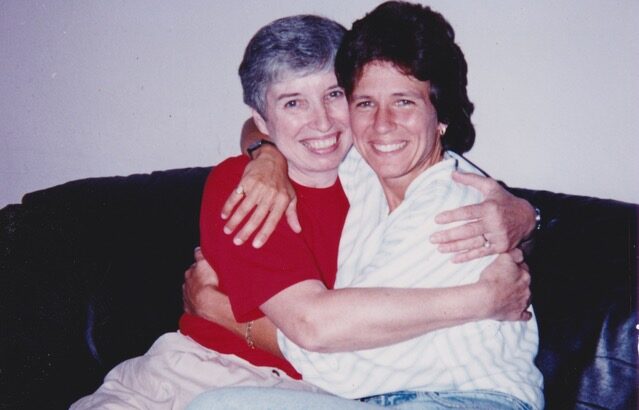
Inspired by years of watching elite piano competitions with her mother, Nicole Conn crafted Descending Thirds as an emotionally charged exploration of ambition, artistry, and identity. Set against the intense backdrop of competitive classical music, the story dives into the psychological and emotional cost of greatness, where love and obsession intertwine. Deeply personal, the project also serves as a tribute to her mother — whose influence shaped both the musical heart of the novel and its powerful emotional core.
Nicole, Descending Thirds is such a rich, emotionally layered story. What first inspired you to set it within the world of elite piano competitions?
Long before I ever wrote Descending Thirds, my mother, Christa Hoven, trained as a classical pianist before later becoming a piano teacher. Together we spent years devouring videotapes of the legendary Van Cliburn International Piano Competition. I would often buy one or two new Cliburn tapes for birthdays or Christmas, and we would lose ourselves in the breathtaking performances, emotional volatility, artistic triumphs, and impossible pressure these young musicians faced competing at the highest level.
Those evenings became far more than a shared love of music; they became the emotional foundation for the novel and the inspiration behind the fictional International Ketterling Piano Competition that thrusts Alexandra and Sebastian into this brutal, intoxicating world where one performance can alter the trajectory of an entire life. I became fascinated not only by the artistry, but by the psychology of ambition, obsession, discipline, and the emotional cost of greatness. But the best part is how this contest informs about two of the three main characters.
Alexandra is caught between two very different brothers. How did you approach building that dynamic and emotional tension at the heart of the novel?
I never wanted the triangle to feel superficial or rooted in simple romantic competition. Sebastian and Conrad represent profoundly different kinds of connection, desire, artistry, and emotional danger. Sebastian is charismatic, seductive, a “finger-proud” performer. Conrad is quieter, almost frighteningly gifted, deeply internal, and emotionally exposed through his music in ways he could never articulate otherwise.
Alexandra is not simply choosing between two men — she is choosing between two versions of herself and two very different futures. What fascinated me was how love can awaken entirely different emotional identities within us depending on who sees us, challenges us, or truly understands us. The emotional tension comes from the fact that both relationships are real, devastating, and transformative in completely different ways.
The themes of ambition, obsession, and artistic sacrifice run deep. What do you hope readers take away about the true cost of greatness?
I think greatness is often romanticized from the outside. We see the performance, the applause, the transcendence — but we rarely see the loneliness, fear, pressure, isolation, and emotional brutality underneath it. Especially in elite artistic worlds where identity becomes inseparable from achievement.
What interested me most was exploring what happens when love, ambition, artistry, sensuality, and emotional survival all collide at once. The novel asks whether extraordinary talent is ultimately a gift, a burden, or perhaps both simultaneously. And whether the pursuit of greatness can coexist peacefully with intimacy, emotional wholeness, and real human connection.
The audiobook sounds incredibly immersive, almost cinematic. What was the vision behind integrating original compositions and classical pieces into the storytelling?
I wanted the audiobook to become something much larger than a traditional narration experience. Since music is the emotional bloodstream of Descending Thirds, I desperately wanted listeners — especially those unfamiliar with classical music — to actually hear the beauty, longing, passion, and emotional devastation the characters were experiencing throughout the story.
The audiobook includes over seventy licensed classical musical snippets woven directly into the narration, along with original compositions created specifically for the novel by composer Sally Bishop Melbourne. The extraordinary multi-award winning Mary Jane Wells narrated and produced the audiobook, and together we approached it almost like creating a film for the ears. The goal was immersion — allowing listeners not just to imagine the music, but to emotionally live inside it. And because I love this music so much I wanted to introduce it to those not familiar to the fabulous repertoire of classical music.
This project is also deeply personal, especially with your connection to your mother. How did that relationship shape the emotional core of the book?
The relationship between mothers and daughters lives deeply inside this story. My mother introduced me to classical music almost from birth, and it became part of the emotional language of our relationship. Many of the themes in Descending Thirds — love, expectation, discipline, sacrifice, longing, artistry, emotional inheritance — were shaped by that bond.
In many ways, writing the novel became an exploration of how parents unknowingly pass both their gifts and their wounds forward. My mother’s love of music became my love of music. Her emotional world became intertwined with mine creatively. By the time I finished the audiobook, which included several of my mother’s own piano performances woven into the score, the project had become profoundly personal. She passed away two days after its release, so Descending Thirds now feels not only like my most personal work creatively, but also a kind of emotional love letter to her.
Award-winning filmmaker and novelist Nicole Conn has released Descending Thirds, a groundbreaking audiobook that blends narration with classical music

Narrated by multi-award-winning performer Mary Jane Wells, the audiobook features performances by Conn’s own mother. Original compositions for the two brothers at the core of the story were written and performed by Royal Academy-trained pianist Sally Bishop Melbourne — whose personal journey closely mirrors the novel’s own heroine. The collaboration amongst the women, born from shared grief and resilience, makes the audiobook itself a powerful story of healing through art.
More than 25 years in the making, the novel is deeply personal for Conn. Inspired by her late mother, a classical pianist who appears as a character in the novel, the book explores legacy, ambition, and the emotional cost of perfection. Perfect for fans of romance and character-driven dramas, Descending Thirds bridges love, music, and artistry in a story where passion and power are ultimately inseparable. It is currently in development as an Emmy Epic limited mini-series.
The author, Nicole Conn, is an award-winning writer and filmmaker known for crafting bold, emotionally intelligent stories centered on complex women navigating love, identity, and resilience. Conn is known for her signature, searing romance — the kind of films audiences watch over and over again.
Her debut feature, Claire of the Moon, became a cult classic and a pioneering work for the LGBTQ+ community, helping expand lesbian representation in independent cinema. The film launched a career devoted to strong, smart, female-led storytelling that explores passion, vulnerability, and personal transformation. Conn went on to write and direct acclaimed features including Elena Undone, recognized as a defining modern romance, and A Perfect Ending, praised for its emotional depth and sensual honesty. Her documentary Little Man, chronicling the premature birth of her son, received multiple Best Documentary honors and was acquired by Showtime. But perhaps her most personal film, More Beautiful for Having Been Broken, is also her best.
She is also the author of several novels, including Descending Thirds, a sweeping romantic drama set in the high-stakes world of classical music. The novel has received multiple fiction awards and is currently in development as a limited television series. Its cinematic audiobook edition uniquely integrates classical repertoire and original score. You can see more about the book at DescendingThirds.com.
Multi-award-winning Conn continues to create character-driven stories that champion women’s interior lives, ambition, and emotional truth. She lives and works in Los Angeles and advocates for women-led storytelling through NicoleConnFilmsGlobal.com.
Our narrator, Mary Jane Wells, is a storyteller drawn to transformative work. Trained at the Royal Scottish Conservatoire, she spent 12 years performing across the UK and Europe before building a career in the US, including appearances at the Mark Taper Forum and touring internationally with her solo show Martha.
Now based in Los Angeles, she is an award-winning voice actress who expanded into writing and story development, contributing to the Sundance Select documentary Holy Hell (2016), later acquired by CNN and Netflix. Her acclaimed solo show Heroine (2017), based on a survivor of military sexual trauma, won multiple awards, toured Scotland, and played to sold-out audiences at the Edinburgh Festival Fringe and the Kennedy Center. The project later became an award-winning audiobook, earning an Earphones Award and the Audie Award for Best Original Work.
Mary Jane has spoken and performed at major international events, including the UN Conference on Sexual Violence in Conflict. Her work focuses on authentic, impactful storytelling that uplifts without exploitation. Her upcoming solo show, The Good Girl, continues this mission with a more personal, irreverent lens.
I will return with a full review for Descending Thirds soon, but until then, take care, stay safe, and don’t forget, always listen with your heart!
Nicole Conn Featured in Authority Magazine
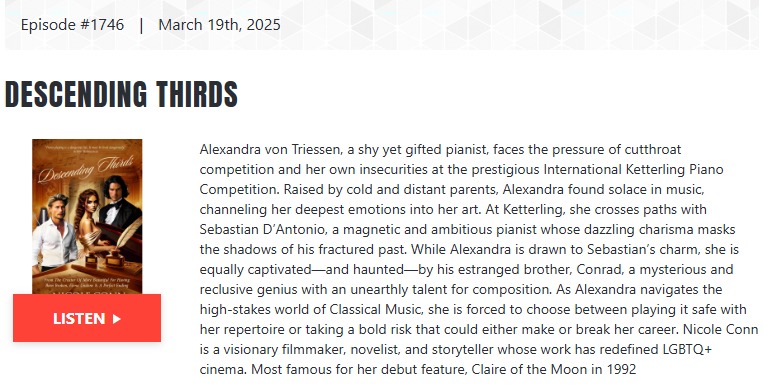
The Kathryn Zox Show

Arroe Collins Like It's Live - Nicole Conn
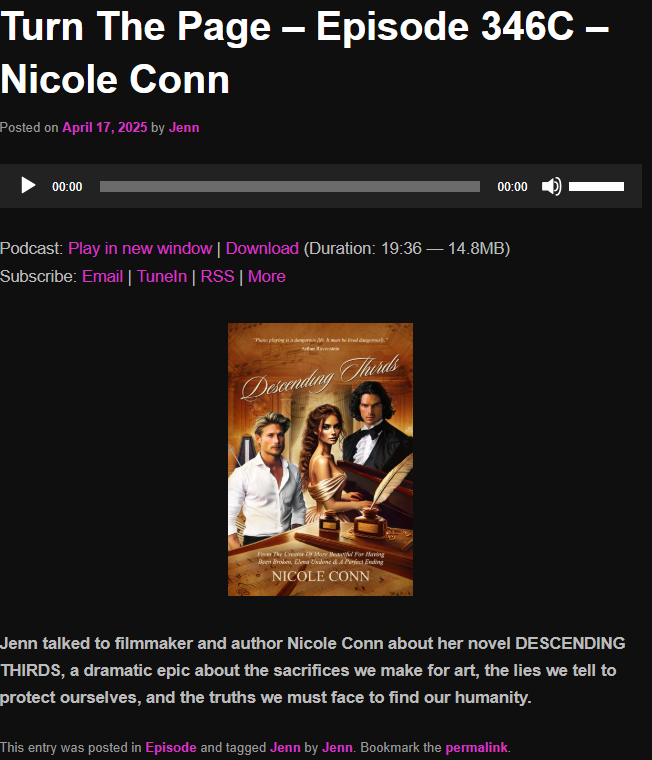
Turn The Page – Episode 346C – Nicole Conn
Meet Nicole Conn.
To begin with, Nicole Conn is a writer, director, editor, and mother. With over three decades of storytelling through film, Nicole’s journey as Founder and Owner of Nicole Conn Films, LLC has been driven by a passion for creative writing. Nicole has an unwavering commitment to telling impactful stories. Her expertise is in new media. This enables her to craft narratives that resonate with diverse audiences, aligning with the cultural ethos of her company. Nicole has written five novels, a teleplay, eight screenplays, and has produced two soundtracks.
is a gripping story of ambition, betrayal, and the blurred lines between artistry and integrity. This page-turner explores the sacrifices we make in pursuit of our dreams and the devastating consequences of hidden truths. With two shocking twists that will leave you reeling. This unforgettable novel will resonate with anyone who has ever dared to reach for greatness.
Coming Out for Love.
Coming Out for Love (COFL) is the hottest reality show that’s taken the world by storm. Watch as a group of inspiring LGBTQ+ women embark on a transformative journey of self-discovery and love.
Nicole’s Takeaways.
“I have been blessed beyond blessed through my lifetime. I’ve been able to pursue what I’m most passionate about. My work has given me the fire to face any challenge. I’ve made myself learn not to fear failure no matter how soul-destroying it might feel in the moment. The lessons are unparalleled. And it gives you the opportunity to be a pioneer. But most importantly, Motherhood changed me to my very core and is by all measurements my greatest gift.
In Closing.
Finally, as you will hear, embracing the power of visual storytelling, Nicole strives to bring unique perspectives to the screen. In doing so, she fosters a deep connection with viewers. Furthermore, by leveraging her skills in video production, she has successfully helmed a variety of acclaimed projects. They include, “Elena Undone” and “A Perfect Ending.” Each piece reflects a dedication to authenticity and a meticulous approach to filmmaking, ensuring that every story is “More Beautiful For Having Been Broken.